
Shubh Vivah
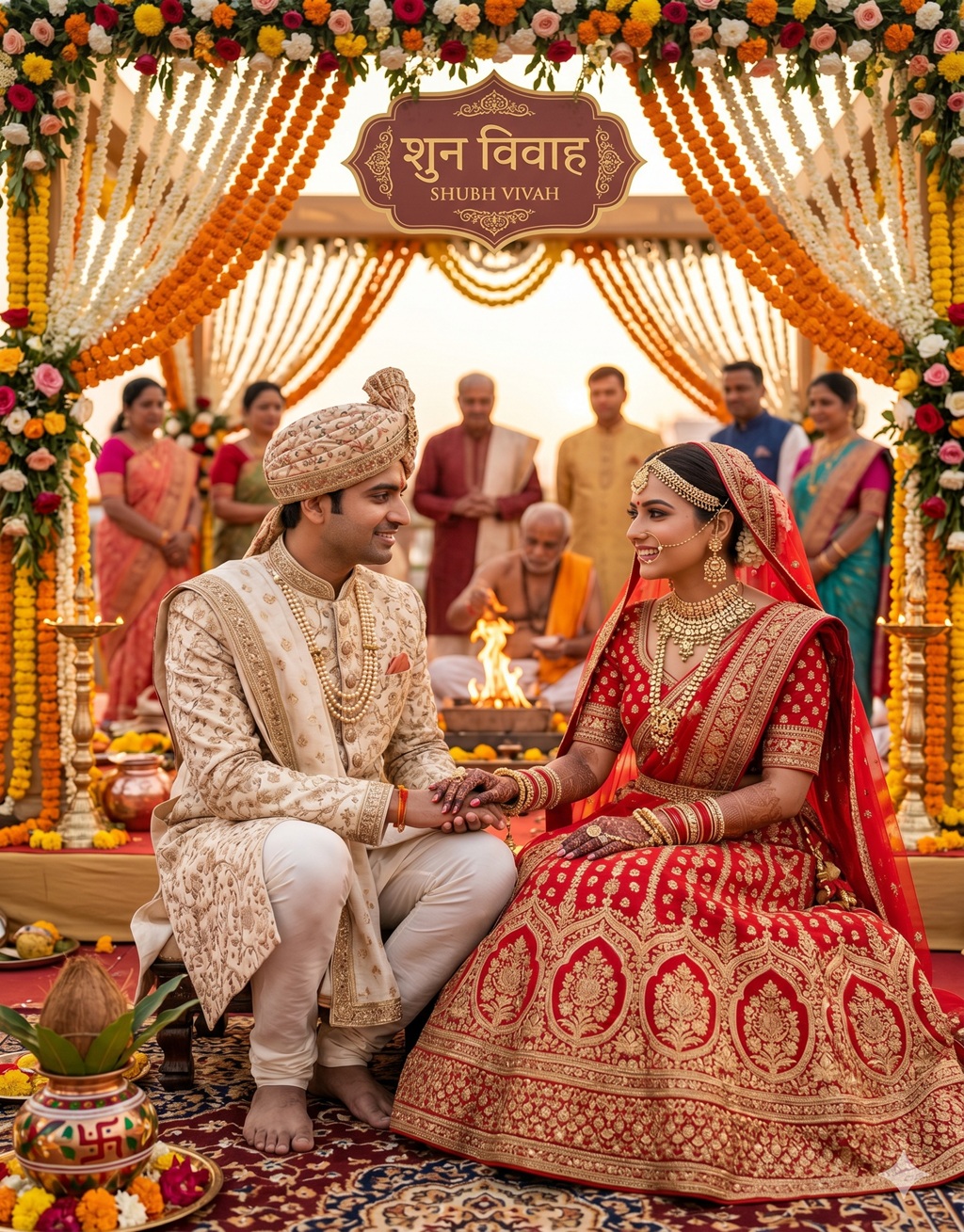
A Shubh Vivah (auspicious marriage) is a deeply spiritual Hindu tradition where two souls and their families unite. Rooted in ancient Vedic texts, the ceremony focuses on building lifelong partnership, mutual respect, and shared duties. The rituals take place under a decorated pavilion known as the Mandap.
Key Wedding Rituals
Every step in a Hindu wedding carries profound symbolic meaning. The central ceremonies include:
- Kanyadaan (Giving Away the Bride): The bride’s parents officially give her away, placing her hand into the groom’s and entrusting him with her care.
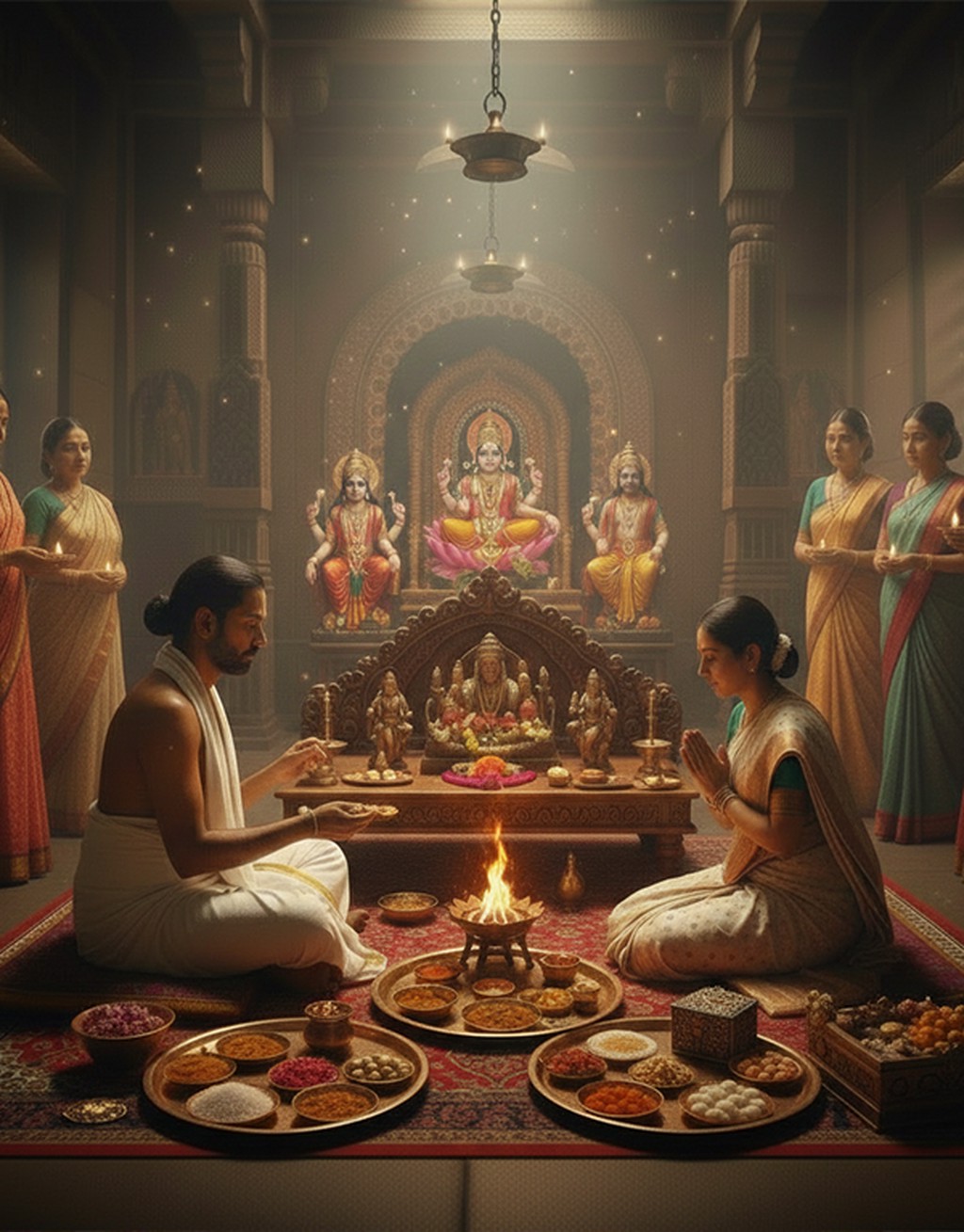
- Vivah Homa (Sacred Fire Ceremony): The priest lights a sacred fire (Agni), which acts as a divine witness to the marriage. The couple makes offerings (like puffed rice) into the flames.
- Agni Parikrama or Mangal Phera (Circumambulation): With their garments tied together (a symbol of unity), the couple walks around the sacred fire. Each of the four rounds represents a core pillar of life: Dharma (duty), Artha (prosperity), Kama (passion), and Moksha (spiritual liberation).
- Saptapadi (The Seven Steps): This is the heart of the ceremony. The couple takes seven steps together, reciting a specific vow of love, devotion, and mutual support for each step.
- Sindoor and Mangalsutra: The groom applies Sindoor (vermilion) to the bride’s center forehead and ties the Mangalsutra (a sacred gold and black bead necklace) around her neck to seal the sacred bond.
- Ashirwad (Blessings): The ceremony concludes with the couple seeking blessings from elders and the priest for a prosperous and harmonious married life.